
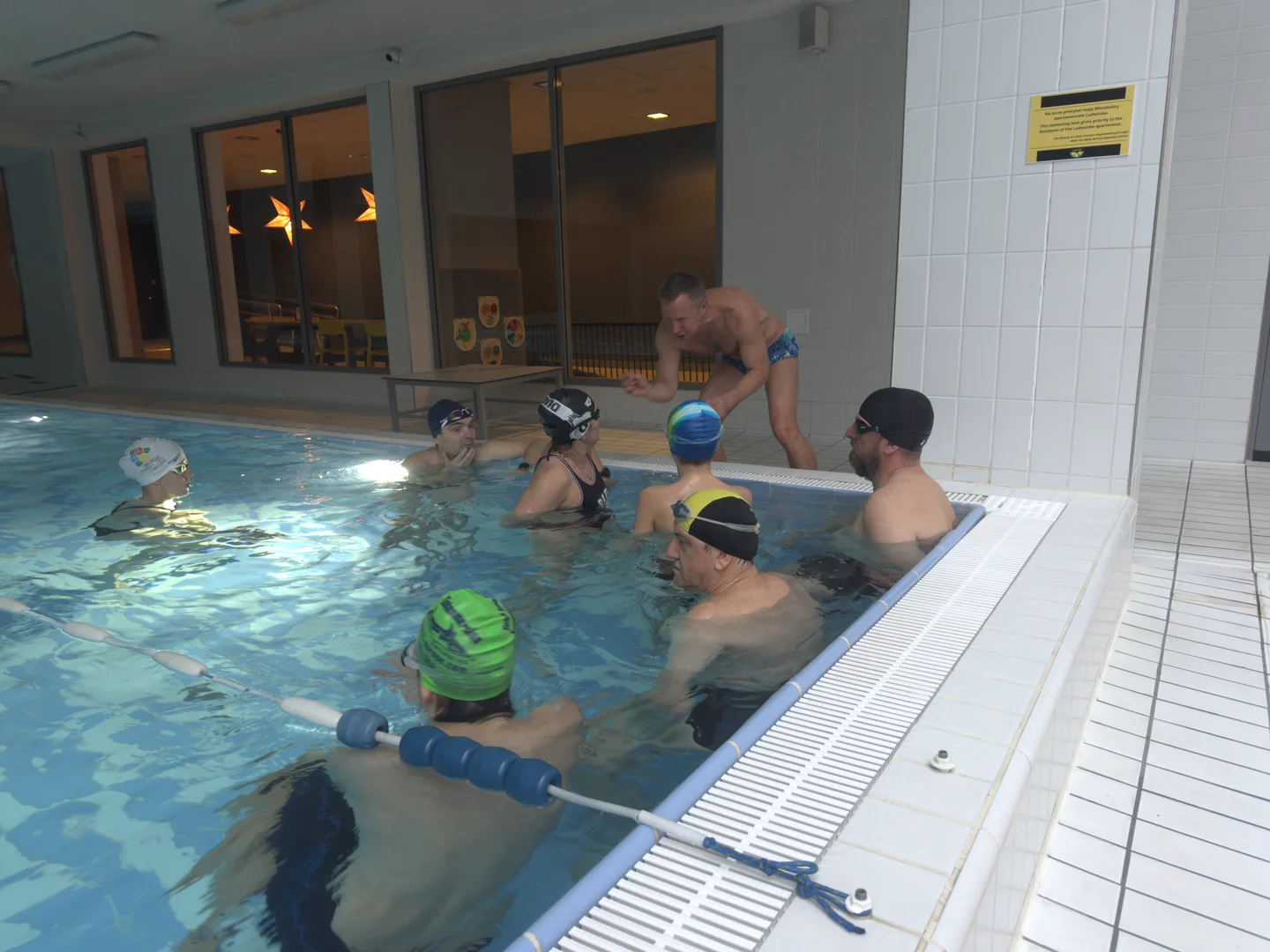
Total Immersion Drills with Tempo Trainer: The Perfect Combination
How to combine Total Immersion drills with tempo trainer work. A guide to Superman Glide, Fish Drill, Skating, and Patient Arm.
Total Immersion swimming and tempo trainers are a natural match. TI teaches you how to move efficiently. A tempo trainer teaches you when to move consistently.
Together, they create swimmers who are both technically sound and rhythmically disciplined.
Why Combine TI Drills with Tempo Work?
- Balance and body position
- Streamlined, efficient movement
- Hip-driven propulsion
- Mindful, conscious swimming
- Consistent timing
- Objective feedback
- Rhythm internalization
- Pace awareness
Adding a metronome makes that consciousness measurable.
The Core TI Drills with Tempo Recommendations
What it is: Floating face-down with arms extended, body in streamline position.
Purpose: Teaches balance and the feeling of being "supported" by water.
Tempo trainer setting: Not needed for basic Superman Glide. This is about stillness, not rhythm.
Progression with tempo: Once you can hold Superman Glide comfortably, add gentle kicks on each beep (try 1.5-2.0 seconds per beep) to practice rhythmic kicking without losing balance.
What it is: Floating on your side, bottom arm extended, top arm resting on thigh, face looking up.
Purpose: Teaches side balance and the "skating" position you pass through during each stroke.
| Setting | Value |
|---|---|
| Tempo | 2.0-2.5 sec/beep |
How to use:
- On each beep, take a single kick
- Maintain side position between beeps
- Focus on stillness and glide, not speed
What it is: Similar to Fish Drill but face-down, body rotated ~45°, one arm extended forward.
Purpose: The fundamental position you move through during freestyle.
| Setting | Value |
|---|---|
| Tempo | 1.5-2.0 sec/beep |
How to use:
- On each beep, switch from one skating position to the other
- The beep triggers your rotation
- Focus on smooth weight transfer, not arm pulling
What it is: From skating position, recover the trailing arm by dragging thumb up your side (like a zipper), then switch sides.
Purpose: Teaches high elbow recovery and controlled arm movement.
| Setting | Value |
|---|---|
| Tempo | 1.3-1.8 sec/beep |
How to use:
- Beep = initiate the switch
- Complete the full zipper motion between beeps
- Gradually speed up as the movement becomes natural
What it is: Full stroke focusing on entering the water fingertips-first, like sliding through a narrow mail slot.
Purpose: Reduces splash and drag from arm entry.
| Setting | Value |
|---|---|
| Tempo | 1.2-1.5 sec/stroke |
How to use:
- Each beep = one arm entry
- Focus on the "slot" feeling, not distance per stroke
- Quality of entry matters more than speed
What it is: One arm waits extended while the other completes a full stroke cycle.
Purpose: Prevents rushed, panicked strokes and teaches stroke patience.
| Setting | Value |
|---|---|
| Tempo | 1.5-2.0 sec/beep |
How to use:
- Beep = begin the stroke with the waiting arm
- The extended arm must wait until the beep
- This drill is perfect for learning to "ride" each stroke
Sample Workout: TI Drills with Tempo Trainer
45 minutes All levels
Duration: 10 minutes
- 200m easy freestyle
- 4 x 25m Superman Glide (no tempo trainer)
Duration: 20 minutes
| Drill | Distance | Tempo | Focus |
|---|---|---|---|
| Fish Drill | 4 x 25m | 2.0 sec | Side balance |
| Skating | 4 x 25m | 1.8 sec | Rotation timing |
| Zipper Switch | 4 x 25m | 1.5 sec | Recovery pattern |
| Patient Arm | 4 x 25m | 1.7 sec | Stroke patience |
Rest 15-20 seconds between each 25m
Duration: 10 minutes
- 4 x 100m freestyle with tempo trainer at 1.3 sec
- Focus: maintain drill quality while swimming full stroke
- Rest 20 sec between 100s
Duration: 5 minutes
- 200m easy swimming, no tempo trainer
- Focus on how the rhythm feels internalized
Finding Your Optimal Tempo
Everyone's optimal tempo is different. Here's how to find yours:
Step 1: Baseline Test
Swim 100m at comfortable pace, counting strokes. Note your time and SPL (strokes per length).
Step 2: Tempo Experiment
Swim 4 x 50m at different tempos:
- 1.5 sec/stroke
- 1.3 sec/stroke
- 1.1 sec/stroke
- 0.9 sec/stroke
Step 3: Find the Sweet Spot
Your optimal tempo is where:
- SPL stays reasonable (not too many strokes)
- Effort feels sustainable
- Technique doesn't break down
Common Mistakes to Avoid
Start slow. A 2.0-second tempo feels ridiculously slow at first. That's the point. Master control before adding speed.
The tempo trainer is a guide, not a boss. If you can't maintain TI technique at a given tempo, slow down.
Variety matters. Use the tempo trainer 2-3 times per week, not every session.
The goal is to eventually swim rhythmically without the device. Periodically swim without it and notice if the rhythm stays.
The Progression Path
| Stage | Focus | Tempo Range |
|---|---|---|
| Beginner | Individual drills | 2.0-2.5 sec |
| Intermediate | Drill combinations | 1.5-2.0 sec |
| Advanced | Full stroke with tempo | 1.2-1.5 sec |
| Competitive | Race pace work | 0.9-1.2 sec |
Beyond the Pool
The rhythm you develop with TI drills and tempo training transfers directly to:
Where external rhythm cues don't exist
Where pacing discipline wins races
Where efficiency determines endurance
Triathlon Swimming: Save Energy for the Bike and Run
Why efficient technique matters more than speed in triathlon swimming. Learn how Total Immersion and consistent rhythm save energy.
Swimming After 60: Why Rhythm Makes It Safe and Enjoyable
How Total Immersion swimming benefits seniors, from joint protection to cardiovascular health. A guide to rhythm-based training.