
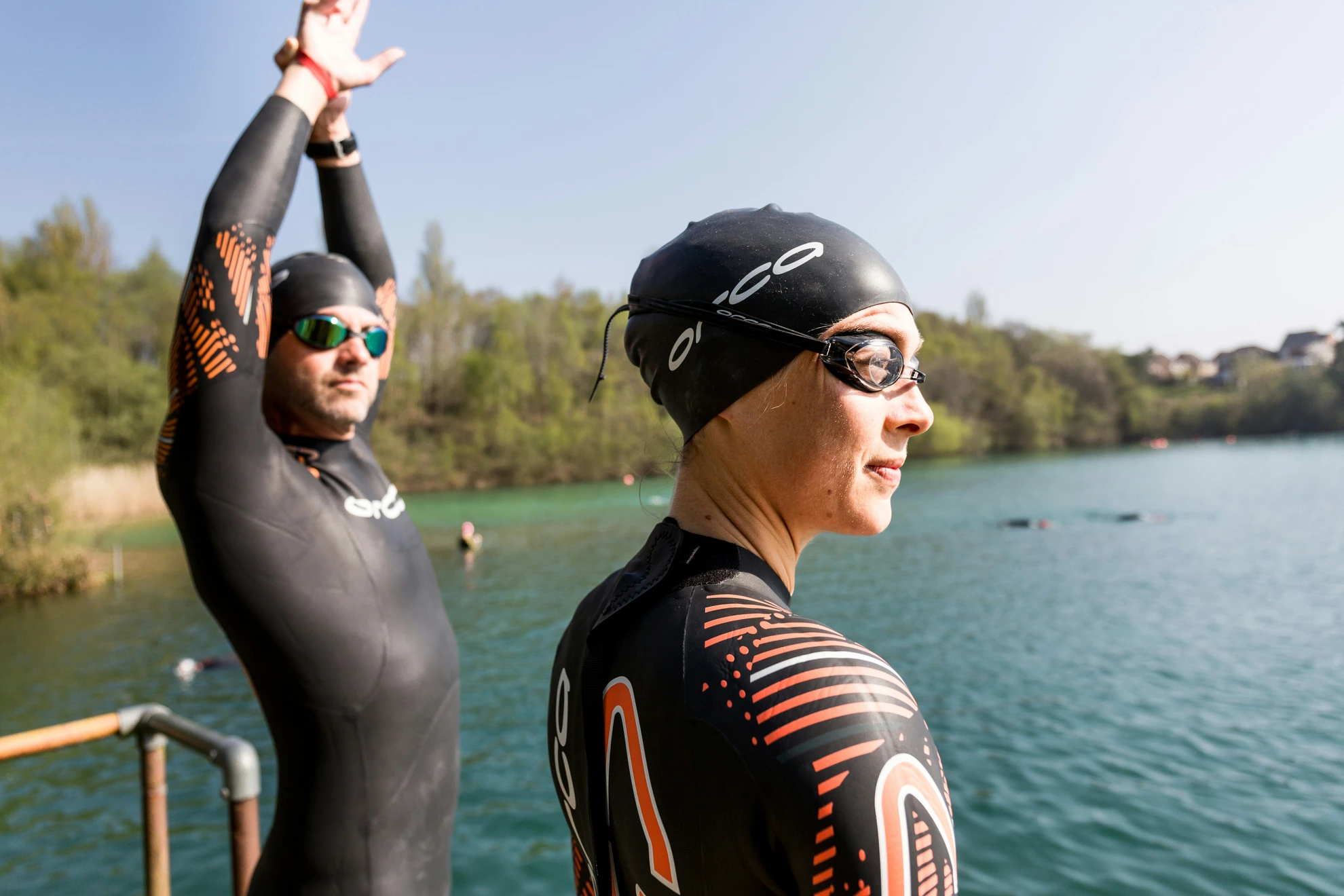
Pool vs Open Water Swimming: The Key Differences
Pool or open water? Compare technique, navigation, mindset, and gear, and learn how holding a steady rhythm carries over between both worlds of swimming.
Freestyle is one stroke, but it lives in two very different worlds. You can swim it in the tidy, predictable lanes of a pool, or out in a lake, river, or sea where nothing stays still for long. Both are the same sport on paper, yet they ask different things of your body and your mind. If you want to move confidently between them, it helps to understand exactly where they diverge.
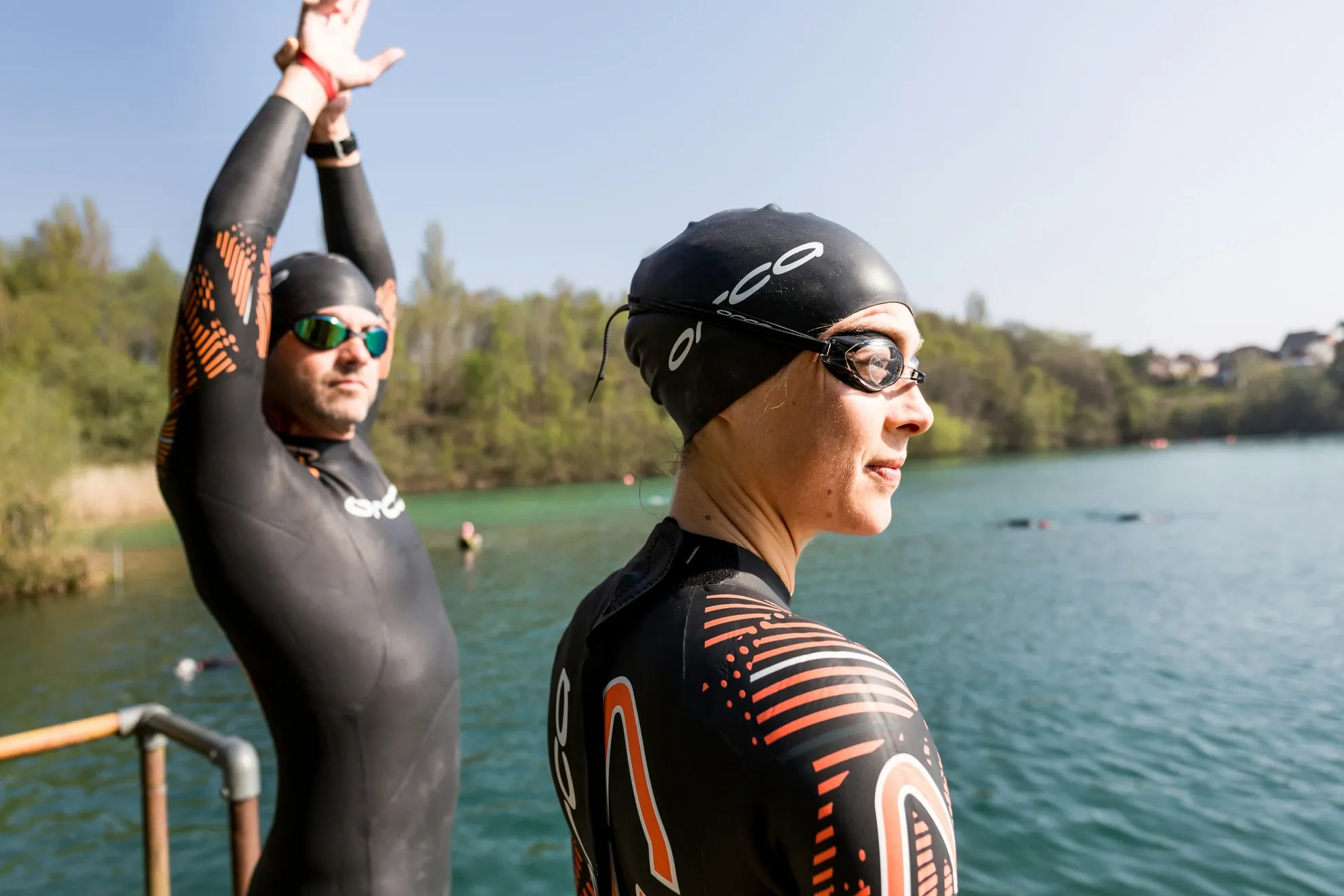
Below we walk through the main differences, from the water itself to technique, navigation, mindset, and gear. The thread that ties it all together is rhythm, because a steady stroke rate is what lets you carry your pool skills out into open water, and back again.
1. The Environment
A pool is an engineered space. The conditions are controlled and they barely change from one session to the next.
- Temperature: Usually held steady and comfortable, often around 25 to 28°C in training and recreational pools.
- Visibility: Filtered, treated water gives you clear sight lines underwater.
- Distance and markings: Lanes are a fixed length (25 m or 50 m), so tracking distance is effortless.
Open water is the opposite. It is a natural system you adapt to, not one that adapts to you.
- Temperature: Varies with the season, the location, and the depth, and can run much colder than any pool, especially in lakes, rivers, and seas.
- Visibility: Sediment, plankton, sand, and algae often cut visibility to almost nothing, which makes staying oriented harder.
- Waves and currents: Moving water and shifting weather pull at your stroke and demand extra skill to stay balanced.
2. Technique
In a pool, technique is about precision and a clean, repeatable rhythm. The calm surface is the perfect place to refine every part of your stroke.
- Steady pace: You can hold one tempo from the first length to the last, with nothing external forcing you off it.
- Turns: Solid walls give you flip turns, a quick reset, and a powerful push-off.
- Body position: Flat water makes it easier to find and hold a long, streamlined line.
Open water rewards adaptability instead. The stroke has to flex around conditions that keep changing.
- No walls: There are no turns and no built-in rest, so your effort has to stay continuous across the whole distance.
- Breathing and sighting: You lift your head regularly to check direction and clear obstacles, which interrupts the smooth breathing pattern you rely on in the pool.
- Working with waves: Swimming with chop and against it takes more strength and better balance to keep your rhythm intact.
That last point is where many pool swimmers struggle. Without lane lines and a pace clock, the steady cadence they took for granted suddenly slips. This is exactly the gap a tempo trainer is built to close. A device like VimoSwim feeds you an audio, haptic, or visual beat so you can lock onto a stroke rate and hold it, walls or no walls. Practice with it in the pool and that internal rhythm comes with you when you head outdoors.
3. Orientation and Navigation
Finding your way in a pool takes almost no thought.
- Reference lines: The line on the pool floor keeps you straight.
- No obstacles: No rocks, buoys, or floating debris to swim around.
In open water, navigation becomes a real skill in its own right.
- Sighting: You check your position against landmarks on shore or buoys on a race course, and adjust as you go.
- Visibility limits: Murky water and waves make holding a line harder, and you often cannot see the bottom at all.
Here, too, a dependable rhythm pays off. When you trust your cadence, you can lift to sight, get your bearings, and drop back into the same tempo without losing your flow.
4. The Mental Side
Many swimmers feel at home in a pool precisely because so little can surprise them.
- Sense of safety: You can always stop at the wall or grab a lane rope, which gives a feeling of control.
- Stable conditions: Predictable surroundings make for calm, focused training.
Open water asks more of your head than your lungs.
- The unknown: Dark water you cannot see into, and the odd encounter with wildlife, can stir up real unease.
- Self-reliance: You are often on your own out there, and that isolation adds its own pressure.
- Shifting conditions: A sudden weather change, rising chop, or an unexpected current forces you to stay composed and adapt on the spot.
A steady cadence is a surprisingly strong anchor when nerves creep in. Counting on a beat gives your mind one simple, familiar thing to hold onto while everything around you stays uncertain.
5. Endurance and Effort
Pool swimming still demands endurance, but the effort is more managed.
- Rest at the wall: Every turn offers a brief break and a push-off that takes some load off your arms.
- Even pacing: A consistent tempo lets you spend energy efficiently across the whole set.
Open water raises the physical bill.
- No breaks: With no walls to lean on, the effort runs unbroken for long stretches.
- Variable resistance: Waves and currents tire you faster, and the inconsistent push of the water means your technique has to keep adjusting.
The swimmers who last longest are usually the ones who pace themselves best. Holding a sustainable stroke rate from the start, rather than charging out fast and fading, is what gets you to the finish with something left in the tank.
6. Gear and Preparation
Pool kit is refreshingly simple.
- Minimal gear: Swimsuit, goggles, and a cap cover the basics.
- Quick setup: Grab your things and you are in the water within minutes.
Open water needs more thought before you even get wet.
- Wetsuit: In colder water, a neoprene wetsuit guards against the cold and adds buoyancy.
- Safety buoy: A tow float boosts visibility and gives you something to hold if you need a rest.
- Awareness: Check the forecast, wear high-visibility accessories, and know the body of water before you set off.
A tempo trainer earns a spot on that open-water list too. Because VimoSwim is waterproof and works through sound and vibration, it keeps cueing your rhythm even when lane lines and pace clocks are nowhere to be found.
Bringing the Two Together
Pool and open water swimming are two faces of the same sport. The pool is predictable and built for sharpening technique. Open water is dynamic and rewards endurance, navigation, and a cool head. Each suits a different kind of swimmer, and training across both will make you stronger and more complete in the water.
The bridge between them is rhythm. Build a reliable stroke rate in the calm of the pool, reinforce it with a tempo trainer, and you give yourself something steady to lean on when you swap walls and lane lines for waves and open horizon.
Curious how rhythm-based training feels in practice? Reserve yours and help us shape a tempo trainer made to keep your stroke steady, in the pool and far beyond it.
Swim to a Better Rhythm
Be among the first to train with Vimo.
The Future of Swimming Tech: Suits, Sensors, and Data
From compression suits to wearables and biomechanics, see how modern technology is reshaping how swimmers train, measure, and improve in the water.
The Amateur Swimmer's Diet: How to Eat for Better Training
A practical nutrition guide for amateur swimmers covering balanced meals, pre and post workout fuel, hydration, and smart supplementation.