
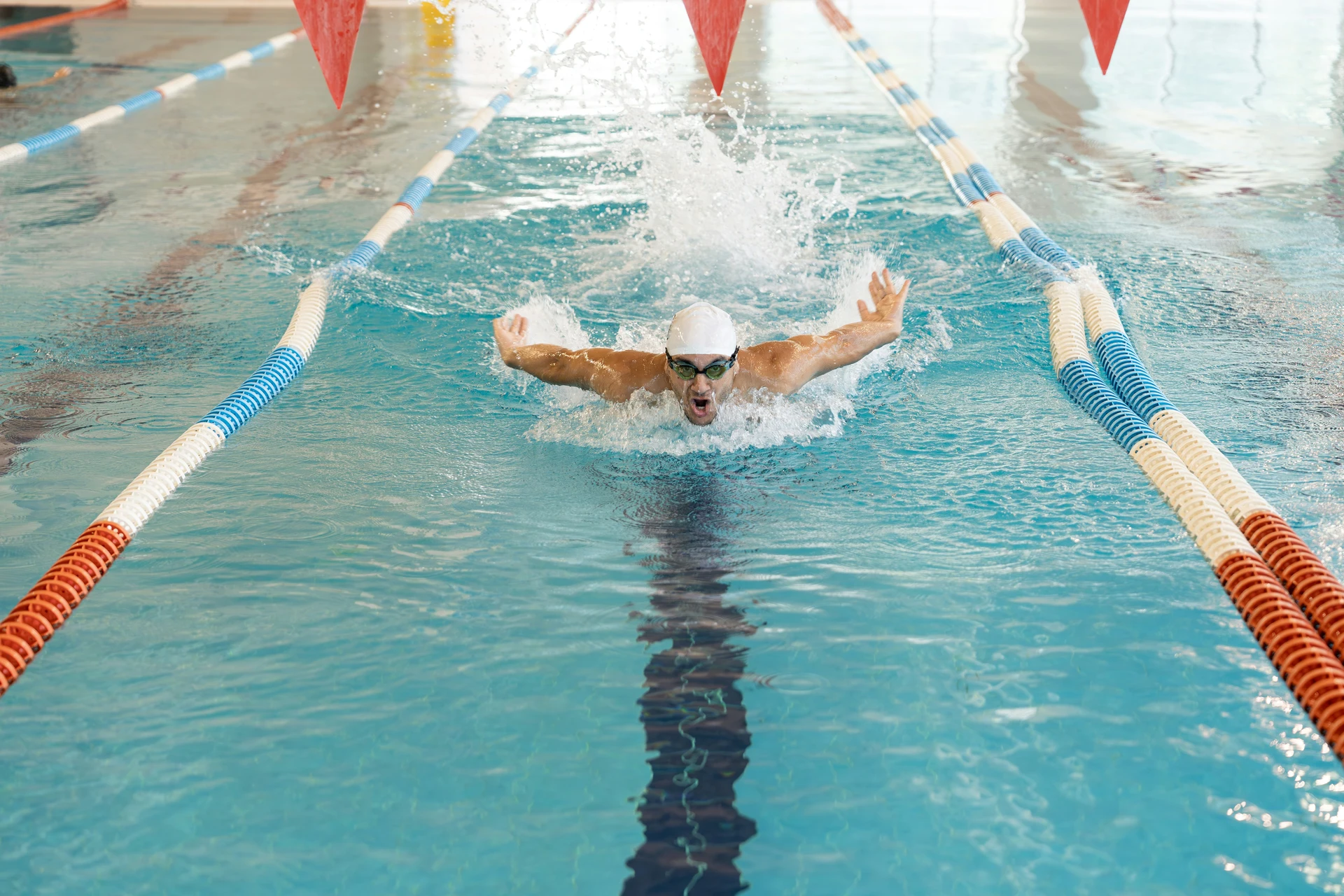
Total Immersion: Where the Method Came From and Why It Works
The story behind Total Immersion swimming, who created it, why it works, and how rhythm and technique help you swim farther with less effort.
Ask most swimmers what makes them faster and they will say "swim harder." Total Immersion turns that idea on its head. Instead of fighting the water, it teaches you to glide through it. By putting fluid movement, energy efficiency, and balance ahead of brute force, this method has quietly reshaped how people learn to swim all over the world. So where did it come from, why does it keep winning people over, and what does it really offer you in the water? Let's take a closer look.
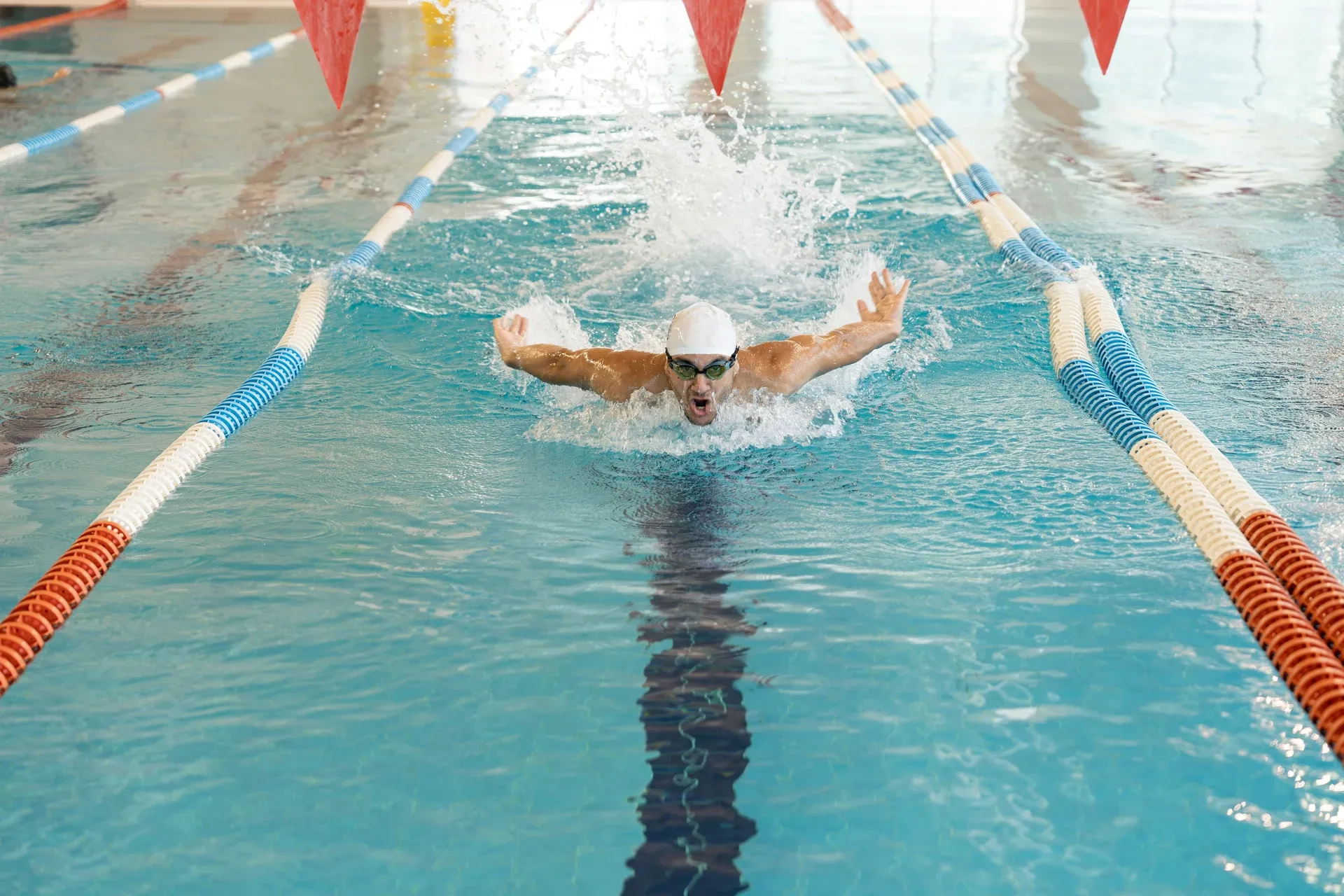
Where Total Immersion Came From
Total Immersion was created by the American swimming coach Terry Laughlin in the 1980s. Laughlin spent years watching ordinary swimmers struggle with freestyle, burning energy without going anywhere fast. He became convinced the problem was not fitness but technique, and he set out to build an approach that would make swimming feel natural, calm, and far more efficient.
Three ideas sit at the heart of his method:
- Energy conservation. Reduce drag, get more out of every stroke, and you can swim longer on far less effort.
- Balance and control. Laughlin argued that efficient swimming starts with a balanced body position and full control over each movement, not with how hard you pull.
- Fluidity and relaxation. Rather than forcing the pace, Total Immersion rewards smooth, relaxed motion. You feel the water better and, honestly, you enjoy it more.
Word spread quickly. Within a few years the method had earned respect among amateurs and competitive swimmers alike, and it became one of the most recognized swimming systems in the world.
Why the Method Spreads
Total Immersion found its first big audience in the United States, where it was born. Triathletes embraced it because efficiency in the water leaves more in the tank for the bike and the run. Distance swimmers loved it for the same reason: covering kilometers without burning out.
From there it crossed the Atlantic. Swimming schools and clubs in the United Kingdom, France, and Germany folded it into their programs, supported by Terry Laughlin's books and instructional videos. The appeal is universal because the problem it solves is universal. Almost everyone wastes energy in the water, and almost everyone can learn to waste less of it.
In Poland the method has grown steadily too, especially among adults. Some want to fix a technique they picked up years ago. Others are learning to swim properly for the first time. Schools in cities like Warsaw, Kraków, Wrocław, and Gdańsk now run Total Immersion courses, both one-on-one and in small groups. You can read more about the method and find coaches at totalimmersion.pl.
What Makes It Work
The reason Total Immersion holds up across countries and skill levels comes down to a handful of real advantages.
- It is efficient. You learn to cut drag and protect your energy, so longer distances stop feeling like a fight.
- It is smooth. Relaxed, flowing movement is easier on your joints and shoulders, which lowers the risk of overuse injury.
- It is learnable. The method breaks technique into clear, progressive steps. Even swimmers who always felt awkward in the water tend to find their footing.
- It builds balance. A stable body position in the water translates directly into more control and more speed for the same effort.
There is one thread running through all of this: rhythm. A balanced stroke is a repeatable stroke, and a repeatable stroke has a tempo. When your cadence is steady, your breathing settles, your pacing holds, and your mind has something reliable to lean on. This is exactly the gap we built VimoSwim to fill. A waterproof tempo trainer that gives you a clear beat to follow makes the relaxed, even rhythm Total Immersion teaches much easier to actually feel and hold, lap after lap.
The Honest Trade-Offs
No method is perfect, and Total Immersion has a few things worth knowing before you start.
- It asks for patience. Because it focuses on refining technique and getting each movement right, progress can feel slower than with a quick, drill-them-hard approach. The payoff comes later.
- It is not built for every goal. If your only aim is to shave time off a 50 meter sprint, where raw power and intensity rule, this may not be your fastest route. It shines over distance, not in a dash.
- Good coaches are not everywhere. In some regions, finding a qualified Total Immersion instructor still takes effort, which can limit easy access to proper courses.
None of these are dealbreakers for most people. They are simply the cost of a method that prizes quality of movement over quick wins.
Is Total Immersion Right for You?
If you want to swim with comfort, cover real distance without falling apart, or finally enjoy your time in the water, Total Immersion deserves a serious look. It rewards swimmers who are willing to slow down, fix the foundations, and build a stroke that lasts. The energy efficiency, the fluidity, the calm pace of learning, these are not small things. For a lot of people they change swimming from a chore into something they look forward to.
Like any approach, it has limits. But for distance swimmers, triathletes, and anyone chasing ease rather than just speed, the benefits tend to outweigh the drawbacks by a wide margin. Whatever your current level, the method can open doors you did not know were there.
The principle that ties it all together is simple. Efficient swimming is rhythmic swimming, and rhythm is something you can train. If you want to follow how we are building tools to help swimmers lock in that steady tempo, take a look at the VimoSwim roadmap.
Swim to a Better Rhythm
Be among the first to train with Vimo.
Three Swimming Styles in Total Immersion: How the Approach Differs
How Total Immersion adapts to backstroke, breaststroke, and butterfly, with a focus on fluidity, rhythm, and movement economy in each stroke.
How to Start Swimming: A Simple Guide for Beginners
New to swimming? Follow six beginner-friendly steps, from picking a pool to breathing and building a steady, calm rhythm in the water.