
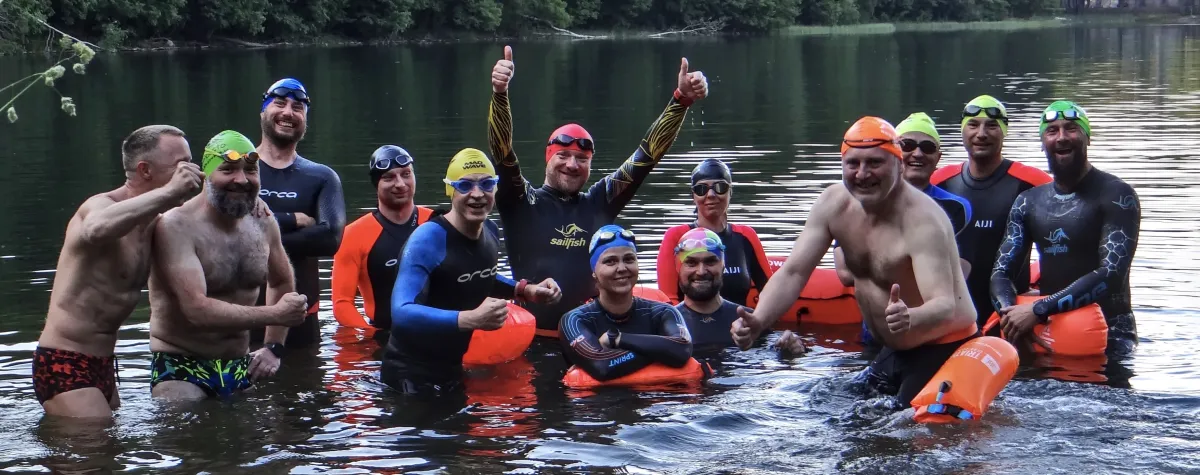
Swim Well: How a Passion for Water Changes Adult Life
How adults rediscover swimming through Total Immersion, and how a musician and freediver turned a passion for water into a calmer life.
There is a particular kind of person who comes to swimming late. They are adults, often busy with careers and families, who one day decide that the water no longer has to feel like a struggle. Aleksander Ryszka is one of those people who turned that quiet decision into a calling. A musician, composer, radio producer, and freediver, he is also a Total Immersion coach from Rybnik who helps adults reach a dream many thought was out of their league: a smooth, effortless front crawl.
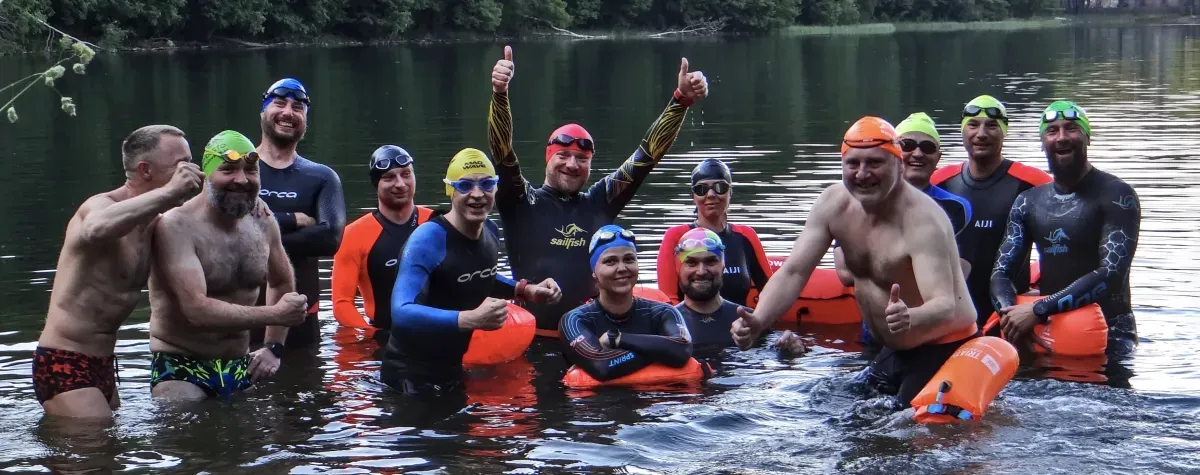
His brand, "Pływaj Dobrze" (Swim Well), grew out of a simple need to share what he loves. We sat down with him to talk about an unusual path into the world of water, and why, for him, swimming has always been about much more than sport.
From Sound to Water
By training, Aleksander is a musician. For years he has worked in sound production, mostly in radio advertising, where rhythm and timing are everything. Swimming, meanwhile, was the passion running quietly underneath, and over time it began to take up more and more of his life.
"Pływaj Dobrze was born from the need to share that passion," he says, "especially with adults who often don't know where to start." That last part matters. Plenty of people learn to swim as children, then carry their childhood habits into adulthood without ever questioning them. Aleksander wanted to give grown-ups a real starting point.
When he asks himself why he chose Total Immersion as his method, the answer is practical. "It teaches you to swim with your head, both literally and figuratively." Front crawl had always felt like the most natural stroke to him, and when he started teaching others, TI was the obvious choice. It delivers results even for people beginning from absolute zero.
Breathing Is the Foundation
Ask Aleksander where good swimming begins and he will point to the breath. Without breath control, he argues, there is no control over the body. In Total Immersion, swimmers learn calm, conscious breathing, which lowers stress and frees the mind to manage technique.
That calm does not arrive on its own. It rests on solid fundamentals: balance in the water, a streamlined body line, and efficient work from the arms and legs. Get those right and swimming starts to feel lighter, and a great deal more enjoyable.
Freediving, a Lesson in Calm
Aleksander's relationship with water runs deeper than the pool. Freediving taught him patience. It is not a sport built on strength but on trust, trust in your own body and your own breath. What he looks for there is the same thing he looks for everywhere in the water: stillness, economy of movement, and lightness. Those values speak to the coach and the swimmer in equal measure.
From Recreation to Mindful Movement
His own swimming did not begin with technique. As a child he swam "his own way," the way most of us do. The shift came in adulthood, prompted by a very human goal: he wanted to teach his son to swim.
So he started learning technique consciously, watching better swimmers and working to reach their level. "When I discovered TI, I knew it was my path." That moment of recognition is one many adult swimmers will know, the point where curiosity quietly becomes commitment.
These days he shares technical tips on his YouTube channel, posting when he can rather than on a strict schedule. His goal is to reach people who train above their actual level without realising it. Everyone, he insists, regardless of skill, can learn something new.
Camps, Crossings, and Open Water
Aleksander does not swim in isolation. He met fellow coach Paweł Lewicki on a Total Immersion course, and the two clicked immediately. Today they run open water camps together. "Paweł has passed on a tremendous amount of knowledge," he says, "and every conversation with him pushes me to keep growing."
The summer camps are intense but deeply rewarding. Most of the time is spent in the water, analysing technique, planning sessions, and teaching the skills open water demands: navigation, adapting to natural conditions, and above all safety.
His own open water story grew out of freediving, which itself began with a small ambition, to swim the length of a pool underwater. That led to competitions, training trips to Zakrzówek and Egypt, and eventually to a deep fascination with depth itself. He swam at the World Championships in Belgrade in 2013 and took the Polish Vice-Championship in 2014. Yet he is quick to put medals in their place. "I swim for myself," he says. Since 2016 he has taken part in marathons, but the point has always been to become a better swimmer, not to collect results.
What thrills him most are the crossings, swimming from one shore of a lake to the other. It is part adventure, part communion with nature, and it captures everything he values about being in the water.
Tips for Open Water Beginners
For anyone tempted to leave the pool behind, Aleksander offers a grounded checklist:
- Assess your abilities honestly. As a rough rule, divide your pool skills by four.
- Before a longer swim, build up to at least 1.5 km of continuous pool swimming.
- Never swim alone. A safety escort is essential.
- A swim buoy is nothing to be embarrassed about. It is simply safety.
- Choose calm water, free of motorboats.
- Respect nature. If conditions are bad, do not swim.
Rhythm for the Aware Swimmer
For intermediate and advanced swimmers, Aleksander reaches for a tool many beginners overlook: a swimming metronome. He uses one regularly to work on rhythm, and he is candid about wishing the market offered more choice.
What does he want from an ideal device? Three things. Simplicity, so you can change parameters quickly without wrestling a complicated menu. Portability, so it clips easily onto goggle straps or slides under a swim cap. And durability, with long battery life and real resistance to pool conditions. "It's not a gadget," he says. "It's genuine support for mindful swimming."
Swimming Is More Than a Sport
Back in Rybnik, Aleksander runs regular Total Immersion courses focused on front crawl fundamentals, with a new edition each month and individual lessons for everyone from nervous beginners to seasoned swimmers. The emphasis is always on independent practice, on giving people the tools to keep improving on their own.
Press him on what swimming really means and the answer turns inward. For him, swimming and freediving are a form of self-discovery, a way of being fully present, here and now. Not for medals, but for calm, for joy, for lightness.
Whether you are a complete beginner, a quiet dreamer, a triathlete, or someone drawn to the deep, his story carries a simple invitation: to swim well, and not only in the technical sense. To swim well in life.
If his approach to rhythm and calm resonates with you, we would love your help shaping a tool built for exactly this kind of mindful swimming. Reserve yours and help us get it right.
Swim to a Better Rhythm
Be among the first to train with Vimo.
Between Water and Air: The Story of Daniel Bobrowski
Meet Daniel Bobrowski: soldier, paratrooper, and Total Immersion coach who teaches adults to swim with calm, balance, and military precision.
Vital Flow: Swimming, Mountains, and Passion. An Interview with Kamil Łęczycki
Kamil Łęczycki, founder of Vital Flow in Nowy Sącz, on swimming, nutrition, and chasing the Seven Summits after standing on top of Kilimanjaro.